Just how far back does this wonderful city's history go? Learn about London's history with Activity Village and enjoy our related activities for children.
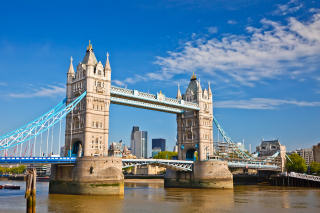
It is thought that London in prehistoric times was merely a collection of scattered rural settlements. Spear heads and weapons from the Bronze and Iron Ages have been found around the Thames, and a recent archaeological dig near Vauxhall discovered evidence of a possible wooden bridge across the Thames around 3,000 years ago!
It was the Romans who were responsible for the city we know today as London. They invaded Britain in AD43, and soon afterwards founded the city of Londinium. It is thought that the original city was small - about the size of Hyde Park!
In AD60 Queen Boudica (also known as Boadicia) of the Iceni tribe rose up against the Romans, who fled. The city was burned to the ground. However, the Romans eventually regained control and rebuilt London, this time adding a Forum (market) and Basilica (a business centre), and slowly building a wall around the city to protect it from further invasion.
The Square Mile
The area inside the defensive wall is now known as The Square Mile, or The City, and is the financial centre of the UK. There is much evidence remaining in the City of the Roman city of Londinium, and often when new buildings are built and excavations are made, exciting archaeological finds are made!
Anglo-Saxons
The Romans left at the beginning of the 5th Century as the Roman Empire crumbled, leaving London largely deserted. Britain was invaded by the Angles, the Saxons and the Jutes (who came from Holland, Germany and Denmark). These Anglo-Saxons were farmers and tended to live outside big towns. We know very little about what happened to London in this period.
By the beginning of the 7th Century the city had become important enough to justify the building of a cathedral, St Pauls. There is still a cathedral (but not the same one!) on the same spot.
Once again we know very little about London for a few hundred years, although during the 9th and 10th Centuries there were many attacks by the Vikings.
"London Bridge is falling down, Falling down, falling down, London Bridge is falling down, My fair lady."
It is thought that this nursery rhyme probably records an attack against London by the Viking, Olaf, at the beginning of the 11th Century.
Medieval London (1066 1485)
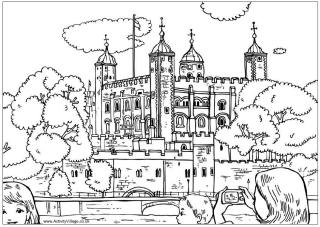
Soon afterwards, the Normans invaded from France and William I (William the Conqueror) took control. He quickly began to build a stronghold to guard London - the Tower of London. The Tower has been used as a castle and a palace, a zoo and a weapons store, a mint (where coins are made) and a prison. We have colouring pages of the Tower of London here (2 versions, for older and younger children):
London Colouring Pages
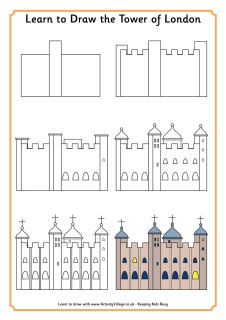
Learn to Draw the Tower of London
A crowded and smelly city!
The city grew up within the original Roman walls, which were repaired and built up. Houses were made of wood and plaster and crowded together very tightly, with the upper floors leaning out over the streets, which were either cobbled or dirt. Rubbish was thrown out of the windows onto the streets below!
Lord Mayor of London
In the early 13th Century, King John showed how important London had become by granting the city the right to elect a Lord Mayor every year. The most famous of the early mayors is Dick Whittington, who was Lord Mayor four times between 1397 and 1420. You may already know the popular and very well-known story about Dick Whittington (not based on his actual life).
If you go to the Square Mile today, you will find lots of evidence of Medieval London in the street names, which tell of the trades and shops which were established in those times. Pudding Lane, Bread Street and Milk Street are obvious examples! The tailor shops were based in Threadneedle Street, and you can find Ropemakers Square, Silk Street, and Poultry too.
There are a number of streets with gate in their name, such as Bishopsgate, Moorgate, etc. These were the original gates in the defensive wall, where people could enter or leave the city.
Tudor London (1485 1603)
London was the centre of trade and government under the Tudor monarchs. We know that there were about 200,000 people living in London by 1600. There were three main areas of population: within the old City walls, in the nearby town of Westminster, and on the south side of the river, in Southwark. Most of London as we know it today was still fields. The Tudors established a number of palaces in London and the area around, and also made deer parks so that they could indulge in their favourite occupation of hunting. You can still see deer in Richmond Park, in south London.
Shipbuilding and Exploration
The river Thames was very important in Tudor times as Britains navy was expanded. Dockyards were built and ships were sent to explore the world - the Americas and India, for example.
Shakespeare and The Globe
The first theatres were built in London during this time. The most famous is of course The Globe, in which Shakespeare owned a share. His plays were performed there. The original theatre was burnt down in 1613 and immediately rebuilt, but closed by the Puritans in 1642. In the 1990s a new Globe Theatre was built, as close to the original as possible, and thrives with constant productions of Shakespeares plays.
17th Century
The 17th Century was an unsettled time for Britain, and particularly London.
The Gunpowder Plot, 1605
"Remember, remember the fifth of November, Gunpowder, treason and plot "

Explore our Gunpowder Plot activities here:
Bonfire Night
Civil War
In the 1640s civil war raged in England, with Charles I and his army battling against Parliament, led by Oliver Cromwell and based in London. The King lost and was beheaded in London in 1649. The reign of Parliament did not last long, however, and Charles II was crowned in Westminster Abbey in 1660.
The Great Plague, 1665
In 1665, rats on board trading ships brought bubonic plague into the city of London. Because people lived in very close quarters and hygiene standards were very low, it spread very quickly. If you caught it, the chances of surviving were very slim.
If someone in your household was infected, a red cross was painted on your door and it was boarded up so that everyone inside was isolated for 40 days. Over the year that the plague rampaged, 100,000 people died.
The wealthy fled the city, while the bodies piled up in the streets and empty houses were looted.
Did you know that a popular childrens nursery rhyme commemorates the plague?
Ring a ring-o-roses, A pocket full of posies, Ah-tishoo, ah-tishoo, We all fall down.
The first line refers to the red, ring-like rash which sufferers developed. The pocket full of posies is the little bunches of herbs and flowers which Londoners carried to protect themselves against bad smells and germs, called a nosegay. One of the first symptoms of the plague was sneezing, hence ah-tishoo, ah-tishoo. And while children now enjoy bumping down quickly to the ground as they sing we all fall down, this of course refers to the plague victims dying!
The Great Fire of London, 1666
A small fire, accidentally started in Pudding Lane in the City of London in September of 1666, was the cause of an enormous fire which lasted four days and wiped out 80% of London. Amazingly, very few people lost their lives, but buildings which had been crammed very close together and were made of wood were easily destroyed. After the fire all new buildings were made of stone and brick.
If you visit the City of London now you can see a tall monument called The Monument to the Great Fire. It is positioned so that if it fell over in the right direction it would point to the exact place where the fire started.
We know a very great deal about the Great Fire of London because it was documented by a Mr Samuel Pepys, who kept an extensive diary.
18th Century London
Britain was a very powerful nation in the 18th Century and London, with its trading capabilities, was the centre of its power. Goods were brought into London from all over the world. During this century, London also became an important financial centre. Much of the business of the day was done in coffee houses in the Square Mile especially in Exchange Alley, the site of Londons stock exchange.
19th Century London
Queen Victoria
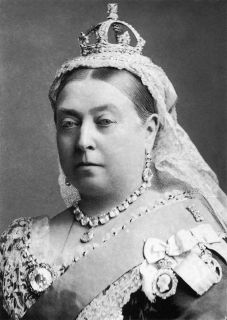
Queen Victoria was crowned in 1837 and died in 1901. During her reign London expanded enormously as industry came to Britain and railways were built linking much of Britain to the capital. London was the centre of world trade and had a large, powerful Empire.
Queen Victoria
Many of the buildings in London today were built in Victorian times. The most famous is probably the Houses of Parliament, built in 1834 after a fire destroyed the original buildings. Many many people live in houses built during Queen Victorias reign. The population of London exploded and the boundaries of the City spread outward.
The Tube
London had the first ever underground railway (The Tube) which opened in 1862!
The Poor
It was not fun to be poor in Victorian times! If you were lucky, you might have gone to a "Ragged School" rather than a Poor House!
20th Century London
London continued to grow both in population and spread during the 20th Century. Between 1919 and 1939, built-up London doubled in size as the suburbs were extended.
Shopping had always been good in London, but big department stores were built in the early part of the Century (Harrods and Selfridges): these were the first of their kind!
The Blitz
There was a lot of damage to London during the Second World War, with some of the worst damage being done to the City, around (and including) St Pauls Cathedral. You can often tell where a bomb landed by the fact that there is a modern building surrounded by older (usually Victorian) buildings. During the Blitz, many people took shelter in the underground railway stations.
It wasn't much fun to live in London during the Blitz, and many children (known as Evacuees) were evacuated from London with just a small suitcase and a name-tag around their necks, to go and stay with strangers in the country. Many did not see their families for the duration of the war, and found it very strange to go back to the city.
The New Century
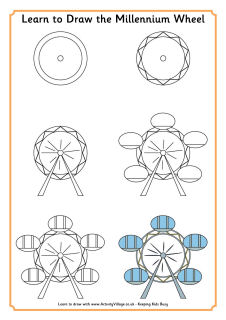
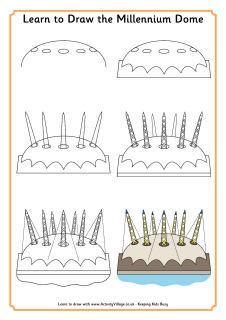
Londoners marked the end of the century by building The Millennium Wheel, or "London Eye", a huge Ferris wheel overhanging the river Thames which gives far-reaching views of London. It is now one of the most popular tourist attractions in the city. A huge exhibition centre, the "Millennium Dome" (now the 02) was also built.