Coloring pages, crafts, printables and puzzles for kids from Activity Village
Google
 
Web www.ActivityVillage.co.uk


Home  |   Coloring Pages  |   Printables |   Puzzles  |   Crafts |   Games  |   Origami  |   Holidays  |   Seasons  |   Themes |   Jigsaws |   Kids Jokes |   Sudoku for Kids
Educational  |  Downloads  |  Articles  |  Family Recipes Newsletter  |  What's New
Don't miss...
Teacher Appreciation
Mother's Day
Father's Day
Spring
Summer
Canada Day
Fourth of July

Rangoli craft for kids

rangoli design

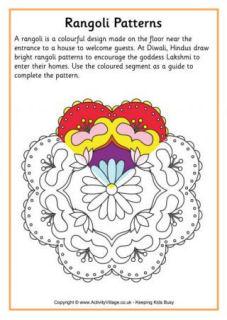
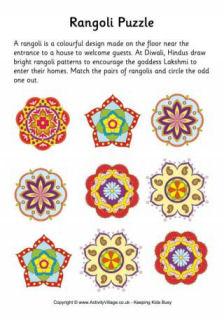
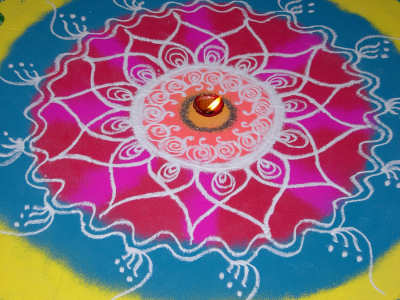
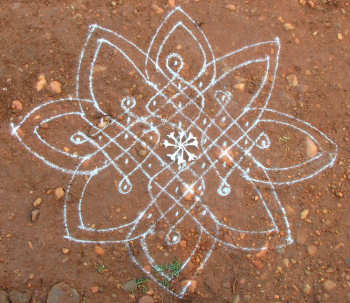
A rangoli is a colourful design made on the floor near the entrance to a house to welcome guests. At Diwali, Hindus draw bright Rangoli patterns to encourage the goddess Lakshmi to enter their homes.
Find our grid papers here

The patterns are traditionally drawn with the fingers using flour, rice grains or coloured chalk.

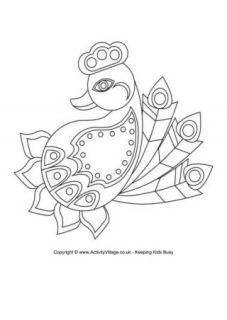
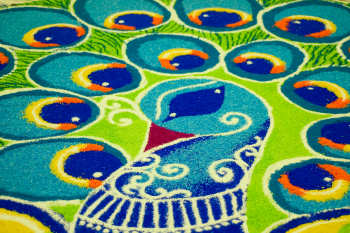
Rangoli can be square, rectangular or circular – or a mix of all three. They are often symmetrical. Rangoli motifs are usually taken from Nature - peacocks, swans, mango, flowers and so on.

Rangoli were originally done in small patterns of about 2 foot square, but now entire areas of floor can be covered in intricate designs, often produced by first drawing gridlines in light chalk.

We have a number of suggestions below for creating Rangoli designs, suitable for children of all ages and abilities.

Rangoli examples

Rangoli come in all shapes and sizes! Before you make your own it is a good idea to have a look at a variety of different examples - perhaps you could print some out to look at with your children or sit at the computer together.
Example 1: beautiful collection of designs done by children in a New Zealand school

Example 2 : bold and bright

Example 3: this rangoli design features the traditional diva lamp in its centre

Example 4: wonderful collection of rangoli designs

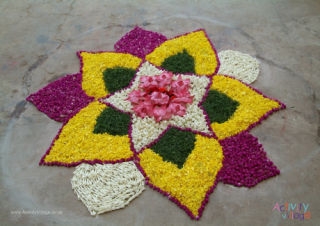
Example 5: this beautiful rangoli has been made with flower petals

Example 6: here is a rangoli pattern made by a Year 3 class in Norfolk

Creating your own rangoli

1. Decide on your design

The examples above may have inspired your children to create their own design - or they may need extra help. Talk about how the designs are usually symmetrical and geometric. Examine the sort of motifs, symbols and colours used in the examples above.

For younger children, it may be best for you to draw the outline of a simple design and ask the children to colour it in.

Older children can draw their own outline freehand, or use one of our grid papers to create a design. The advantage of using a grid paper is that the design can then easily be transferred onto a larger surface.

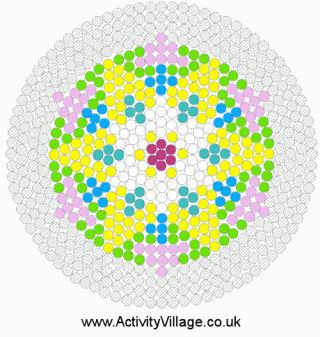
Example 1: some fantastic grid designs to inspire you.

Example 2: more grid designs

If your children prefers to work with someone else's design, we also have a number of links below to outline patterns which can be printed directly off the computer.

2. Decide on your medium and surface

Chalk

Even the youngest children will enjoy creating their own chalk rangoli designs.

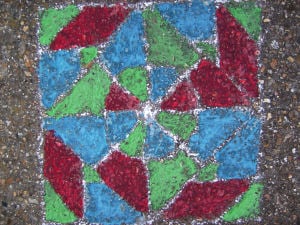
First, use a white chalk to outline your patterns, or to draw dots to form a grid. Then use coloured chalks or poster paint to fill in the design.

You will need:

Black paper (or sandpaper - see below)
Chalk
Ruler

Use your ruler to draw out a grid of dots. These can be as close together (to make the design intricate) or as far apart (for more simple designs) as you like. We used a grid 15cm by 15cm with 3 cm intervals.

Now draw on your design with the chalk (you could try sketching out your design first on our grid paper). Look at our examples for inspiration. Younger children may need a design drawn for them to color.

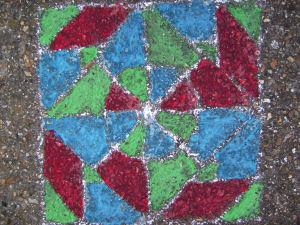
Use colored chalks to color in the design.

rangoli illustration 1  rangoli illustration 2  rangoli illustration 3

Chalk rangoli pictures like these have the added advantage that you can display and save your child's creation longer than the first rain!

You can also use sandpaper instead of black paper. The picture is less liable to smudge and should last longer, and it feels more like colouring onto the pavement outside!

Outdoor Rangoli

You will need:

Chalk
Food coloring (in a number of colors)
Plain flour
Long rule
Thick paint brush
Area of yard or garden path

Use your ruler to draw out a grid of dots, as close together (for intricate designs) or as far apart as you like. In our outdoor rangoli, we used a grid 50cm by 50cm with 5cm intervals.

Now draw on your design with the chalk (perhaps sketching it out first on our grid paper). As before, younger children may need a design drawn for them to color.

Mix together half a cup of flour with a few drops of food coloring and a little water until it forms a paste about the texture of PVA (white) glue. Repeat for each color of food coloring that you are using. Use your pastes to paint your design.

Note: this will stain the path for quite a while (perhaps permanently) so make sure you have permission first! You may want to paint your design onto a large, movable paving stone instead of directly onto the ground.


Jack's design drawn with chalk on the driveway


Jack painting his rangoli design


Jack's finished rangoli - beautiful!

Coloured sand or salt

It is now possible to purchase coloured sand (used mainly for creating layered bottle designs). Alternatively, add food colouring to salt, spread thin and allow to dry out.

In traditional rangoli, the outline pattern is drawn on the floor and then filled in by carefully sprinkling coloured powders. Older children could try this technique directly on the ground with coloured sand or salt, having drawn their outline with chalk. Make sure they try this somewhere away from too much foot traffic, and easy to clean!

You may prefer to draw your outline on a piece of dark coloured paper and then fill in each section with white glue, sprinkling with sand or salt as you would with glitter. Do one colour at a time and shake the excess off onto a large piece of newspaper.

Children could use glitter in some areas of the design for contrast and emphasis.

Lentils and other pulses

Follow the link below to see an example of children using lentils and other colourful materials to create rangoli designs.

Colouring pencils/pens

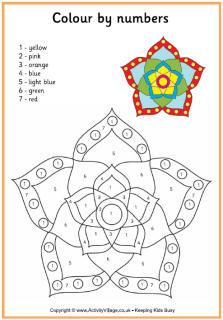
Children will enjoy colouring many of the patterns linked to below, as well as creating their own rangoli patterns with grid paper then colouring in.

Older children can outline parts of a completed rangoli with gold or silver pens or gel pens for a more exotic, sparkly look.

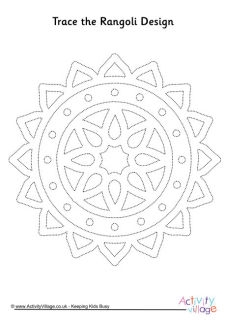
Outline patterns

Example 1

Example 2 (Rangoli colouring page from Crayola)

Example 3: floral design

Example 4: a selection of pretty designs for inspiration or to colour

Example 5: some exotic designs

Example 6: a pretty pattern

rangoli craft

Other ideas and links

Paper plate variation
Scroll down to see how some Year 3 children created rangoli-type designs using paper plates and colourful pulses - a selection of these would make a beautiful display
http://www.wheatfieldsjm.herts.sch.uk/pupils/ppyearthree.htm

Computer generated rangoli
Try colouring some rangoli patterns on your computer!
http://www.blss.portsmouth.sch.uk/hsc/rangoli.shtml

Simple grid designs
This excellent page has some simple grid designs which can be drawn with one continuous hand movement - which is how traditional rangoli are created in India!
http://www.civilization.ca/cultur/inde/indact4e.html

Here is a presentation about rangoli which might help you get started in designing your own.
http://www.primaryresources.co.uk/art/powerpoint/Indian_Rangoli_Patterns.swf  

Back to Diwali for Kids

Back to Holiday Pages


Latest Diwali activities...

Diwali door hanging (toran)
Diwali door hanging

Rangoli
Rangoli - step by step instructions for creating your own rangoli designs, inside and out!

Flower garland craft
Flower garland

diwali diva craft
Diya craft 1

Diya craft for Diwali
Diya craft 2 (tea light holder)


Painted candle craft


A Small Publishing Website    Contact Us    Sudoku for Kids   Privacy Policy

These pages are property of Activity Village and are for personal and classroom use only